


Like many chapters, a constant challenge is to attract, retain and recruit new members. To answer that challenge, the companions of Sacred Delta Chapter No 216 in the Gladstone Group, who meet in the Adelphi Hotel, Liverpool, decided to hold a White Table event.
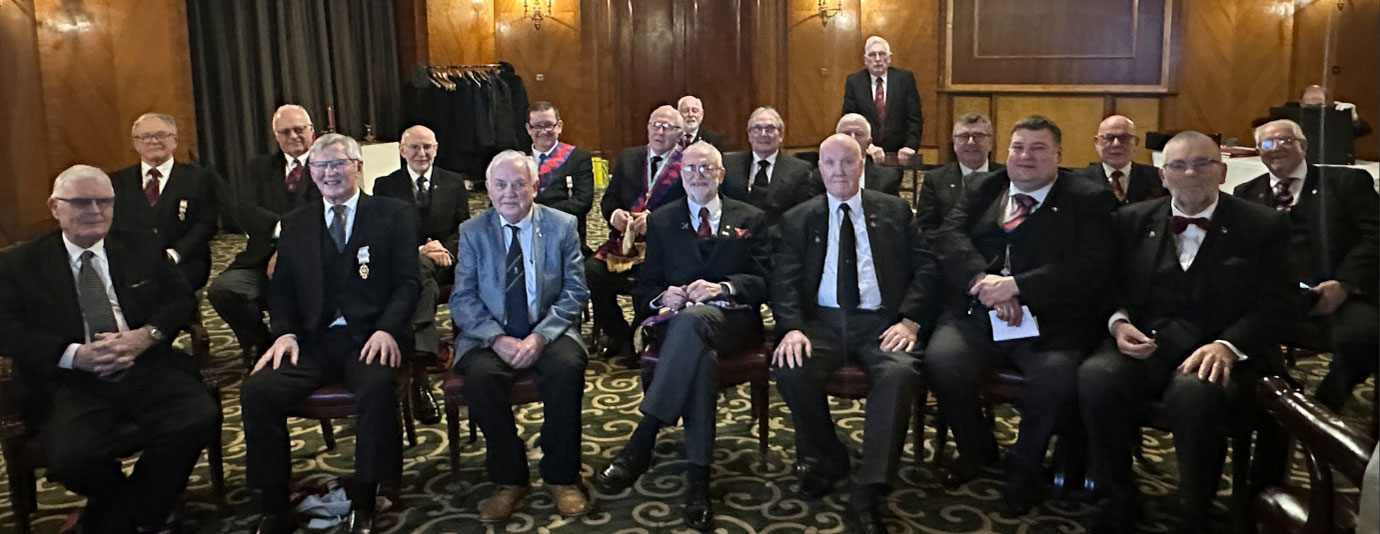
The event, entitled ‘A history of Liverpool from 1849 to the present day’, coincided with the year that the chapter received its charter, allowing the companions and guests to explore the history of this maritime city they call home, from the chapter’s founding to the present day.
The chapter was opened by the three principals, Ian Elsby, David Jones and Mike Fox, under the direction of stand-in director of ceremonies, Mike Melling. Having concluded chapter business, including the admission of a joining member Ken Meath, the chapter was closed in solemn form and the room then set up for guest, David Hearns, a local historian and author.

Having seated all guests and companions, David began a fascinating talk, explaining that in the year that the chapter was founded, Liverpool was at the height of its growth as a major maritime and commercial centre, being the second city of the British Empire in terms of trade and commerce.
Many notable buildings and construction projects were underway, which will be familiar to people far and wide from these shores, The Albert Dock (soon to be renamed the Royal Abert Dock) the world’s first non-combustible dock had recently been completed, the Collingwood Dock, the largest enclosed dock in the world at that time had been completed the year before.
The Liverpool Philharmonic Hall opened in August 1849, construction was ongoing at St George’s Hall and this reflects Liverpool’s civic ambitions in that this was a major period of growth in the city and the surrounding environs. David then turned to the social conditions of the time, noting that while the city was experiencing a period of remarkable growth, many of its inhabitants faced a starkly different reality, marked by severe overcrowding, poor sanitation and recurring outbreaks of cholera, typhus, and tuberculosis.
Prominent among the figures of Liverpool’s past of the time of the chapter’s founding was Dr William Duncan, appointed as the city’s Medical Officer of Health, the first such appointment in any British city. Dr Duncan was instrumental in reducing cellar dwellings, sanitary reform and reducing mortality rates to such an extent, that Liverpool became a model for urban public health reform. A statue of Dr Duncan stands in St John’s Garden’s Liverpool, and perhaps as a fitting tribute overlooks a public house of some standing which also bears his name.

David delivered a vivid and illustrated account of Liverpool’s history in a concise, yet thoroughly engaging presentation, which concluded with a question-and-answer session. All present were unanimous in their view that they could have listened to David for much longer, such was the interest of the subject and the manner with which it was presented.
Companions and guests then retired to dinner in the aptly named Mersey Suite at the Adelphi Hotel, where David was warmly thanked and duly toasted for his excellent talk. David was presented with a cheque for £50 in support of St John’s Hospice.
The chapter looks forward to hosting another White Table event on a similar theme of local history soon, further details of which will be published in due course. The call to answer the challenge of membership of the Royal Arch continues.