


Warrington Masonic Hall opened its doors to the public for a weekend as part of National Heritage weekend, which takes place across the country each September. Warrington Masonic Hall is fortunate enough to host the Warrington Museum of Freemasonry inside the building, which is one of only four Arts Council Accredited Masonic Museums in England and Wales.
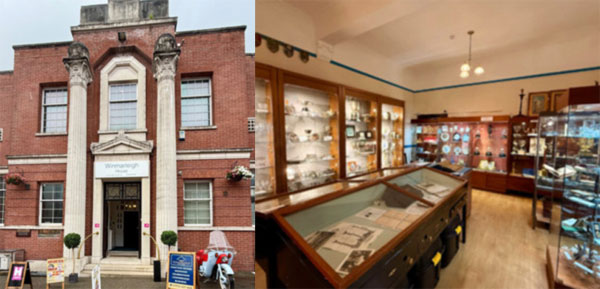
The museum is run by curator Vic Charlesworth with help from a small but resolute team of volunteers, including Caroline Crook and Jim Miller, who have been instrumental in helping Vic not only to put on the exhibition but also to bring the museum to the current standard it is. The museum houses artefacts reflecting over 300 years of Freemasonry history. The collection includes unique items, for instance, a Masonic apron from the Battle of Waterloo in 1815, and items relating to the 1826 Liverpool Masonic Rebellion.
The museum is open every Wednesday and by appointment and offers guided tours to educate the public about Freemasonry, its history, values and charity work, to dispel myths and promote understanding. On display this weekend for the first time will be items used by Lodges that formed part of the ‘Liverpool Masonic Rebellion’ in 1826, which have never previously been seen by the general public.
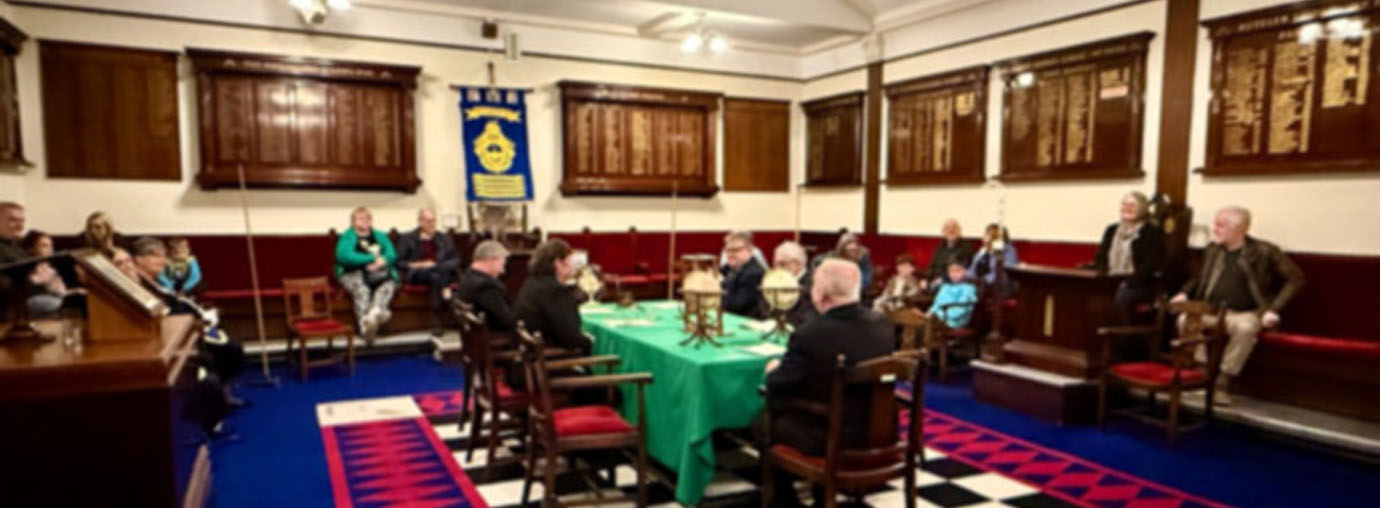
Members from the Wigan Group staged a re-enactment of the rebellion in the small temple in the hall, with the lodge room set out as it would have been some 200 years ago, providing actual quotes from notes stored in lodge books from that time. One of its members, Jim Miller, who is the grandson of James Miller, ‘The Last Rebel’, to rejoin UGLE. Phil Stansby was the narrator along with P O’Brien, D Lea, E Blagborough, D Skett, K Greenall, R Magnall performed the rendition. Also, the Warrington Group Chairman, John Tyrer and vice chairman John McIntyre and other group officers were on hand to talk to members of the public.
The Order of Women Freemasons was represented by Sue O’Neil, PDReg Grand Inspector for the North West, along with the WM of Lodge St Clare No 204, Anne Pye-Brown and entered apprentice Miss Jade Murphy.
What’s it all about then? In December 1823, beneath the gaslit streets of Liverpool, a quiet but profound rebellion unfolded. Not in the public square, but within the sacred halls of Freemasonry, known as the Liverpool Masonic Rebellion, this schism marked the final rupture in English Freemasonry, as a group of defiant brethren sought to resurrect the traditions of the Antient Grand Lodge against the tide of centralised reform.
The rebellion was rooted in a long-standing divide: The Moderns, or Premier Grand Lodge (est 1717), favoured reform and standardisation. The Antients, (est 1751) preserved older rituals and a more inclusive view of Masonic practice.
Though these bodies merged in 1813 to form the United Grand Lodge of England (UGLE), many northern lodges, especially in Lancashire, felt alienated by London’s aristocratic dominance and the Duke of Sussex’s rigid governance. The merger, they believed, had diluted the ceremonial richness of the Craft and imposed a southern orthodoxy on northern traditions.
On 22 December 1823, a group of rebel Freemasons gathered at the Shakespeare Tavern in Williamson Square, Liverpool. Led by Michael Alexander Gage, a tailor with a flair for both rebellion and ritual, accompanied by Thomas Golightly, a powerful Liverpool merchant, and John Robert Goepel a jeweller, they declared the re-establishment of the Antient Grand Lodge.
Their grievances included: The marginalisation of the Royal Arch degree is considered essential by the Antients. The abolition of travelling warrants, which had allowed lodges to operate flexibly across regions. The increasing centralisation of power in London, which left provincial lodges feeling voiceless.
The rebellion spread quickly, culminating in the formation of the Grand Lodge at Wigan, a breakaway body that operated independently until 1913. Though never officially recognised, it became a symbol of northern resistance and ceremonial pride, issuing its own warrants and preserving Antient rituals long after the mainstream Craft had moved on.

The rebellion was not merely about ritual but its identity. In the wake of the Peterloo Massacre (1819) and amid the rise of industrial capitalism, northern England was asserting itself. The opening of the Liverpool and Manchester Railway in 1830, attended by the Freemason, The Duke of Wellington, physically connected rebellious lodges and reinforced their unity.
Freemasonry in the north was deeply entwined with the merchant class, tradesmen and industrialists. Figures like Thomas Golightly and John Robert Goepel lent weight to the movement, which was as much about regional autonomy as it was about ceremonial fidelity.
At its core, the Liverpool Masonic Rebellion was a battle over the soul of Freemasonry: Should ritual evolve to suit modern governance? Or should it remain a sacred inheritance, preserved in its original form? The rebels chose the latter. Their defiance was not anarchic; it was ceremonial, structured, and deeply principled.
Though the Grand Lodge at Wigan eventually dissolved in 1913, its legacy endures. The rebellion serves as a reminder that even within societies with secrets, the call for representation, tradition and regional pride cannot be silenced.
Today, many northern lodges still honour the Antient rituals and maintain a culture of ceremonial pride rooted in the rebellion. It was the last great schism in English Freemasonry and its most poetic.